Understanding Semantic HTML
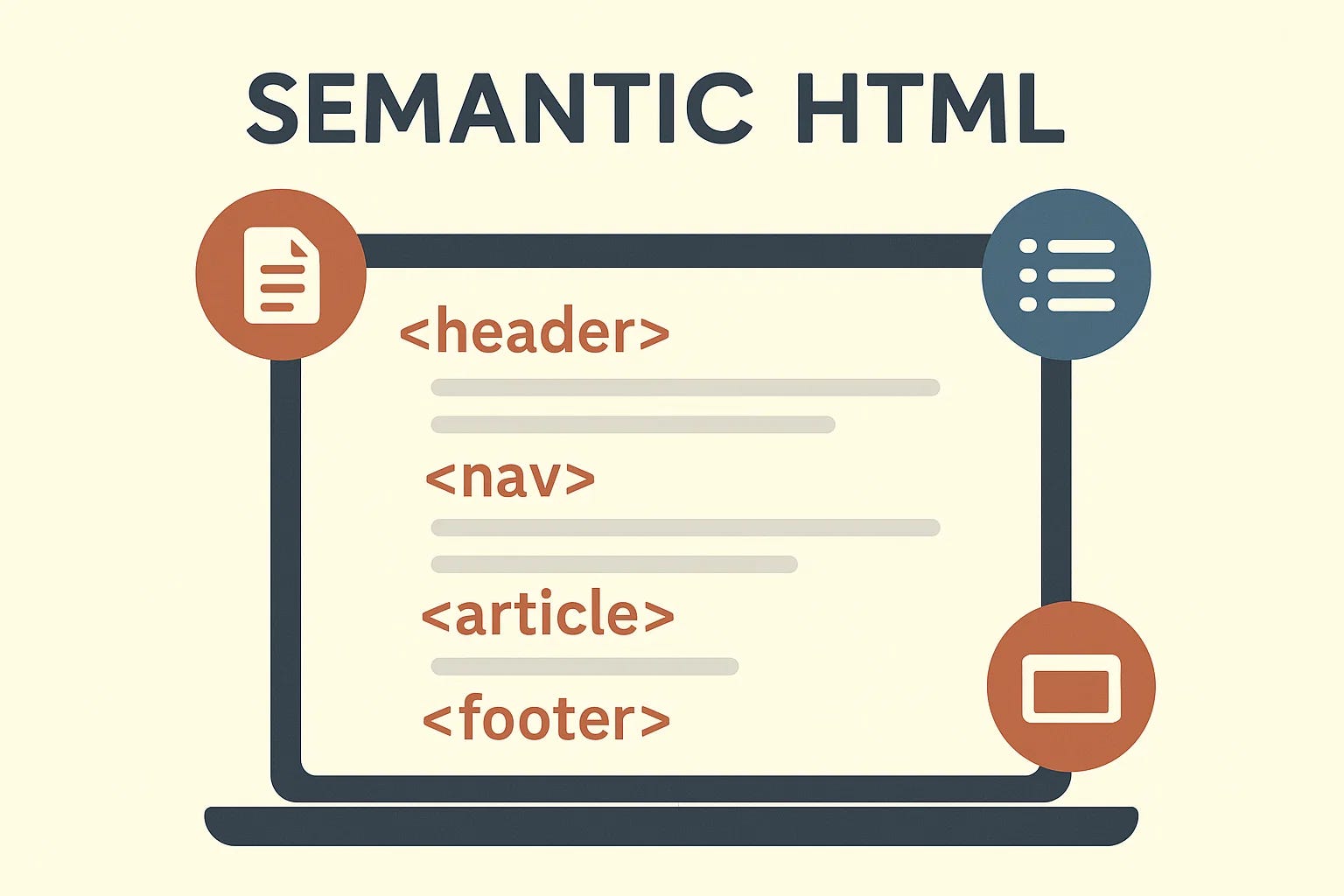
Semantic HTML uses meaningful tags to describe the structure of a webpage.
Instead of relying on generic containers, semantic elements communicate intent to browsers, assistive technologies, and developers.
What is Semantic HTML?
Semantic HTML refers to the use of HTML elements that clearly describe their meaning in a human- and machine-readable way.
Elements such as header, article, section, and footer convey structure without relying on class names.
Why It Matters
Using semantic HTML improves accessibility, search engine understanding, and long-term maintainability of a codebase.
It also makes collaboration easier by making intent obvious.
Common Mistakes
- Overusing div elements
- Ignoring heading hierarchy
- Styling without considering structure
Final take
Writing semantic HTML requires intention, but it pays off by creating clearer, more robust interfaces.